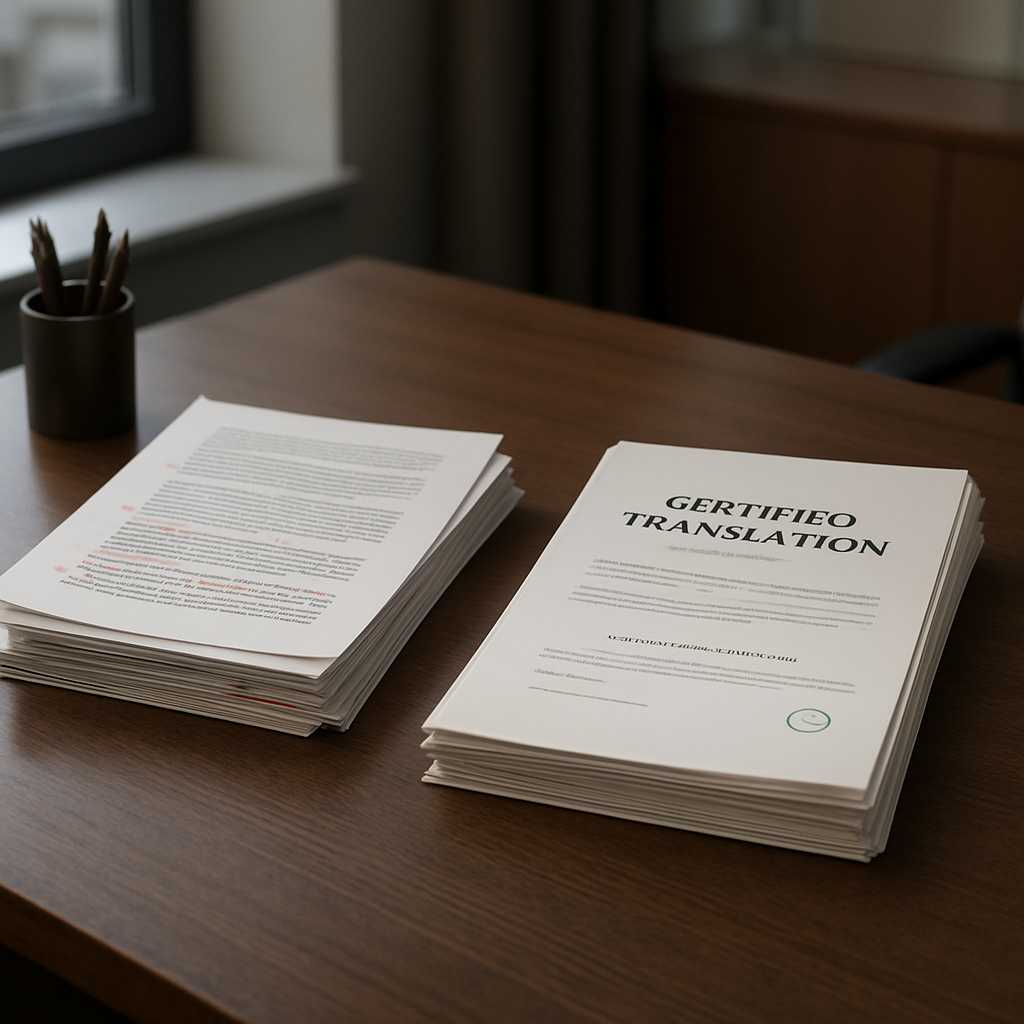
Avoid Rework: How to Submit the Correct Document for Translation the First Time
Submitting the wrong file is one of the fastest ways to turn a simple translation order into unnecessary back-and-forth. If you want to submit the correct document for translation, the goal is not just to send “a copy.” The goal is to send the latest version, as a full scan, with strong legibility, complete pages, and enough context for the translation to be prepared properly the first time.
A translation can only be as usable as the source document behind it. That is why avoidable delays often start before any translator has typed a single word. A cropped bank statement, an outdated tenancy agreement, a passport image with missing edges, or a driving licence photo that shows only the front can all trigger rework. The translation itself may be accurate, but the file pack is already weak.
If you want a cleaner process from the start, begin with certified translation services in London and make sure the file you send is the file you actually need translated for submission.
What “the correct document” really means
The correct document is not simply the document you have nearest to hand. It is the version that matches all four of these conditions:
- It is the right version: The most recent, final, or currently valid version for the authority receiving it.
- It is the full document: Not selected pages, not screenshots of sections, and not only the parts that look important.
- It is clearly readable: Names, dates, numbers, stamps, notes, signatures, and reference details can be read without guessing.
- It is complete for its purpose: It includes any reverse side, annex, signature page, statement period, or supporting page needed to make sense of the record.
That sounds obvious. In practice, this is exactly where people lose time.
The four-part pre-flight check before you upload anything
1. Latest version
Always ask: Is this the version the receiving authority is actually expecting? Common problems include:
- sending an older bank statement instead of the latest issued statement
- sending a draft employer letter instead of the signed final copy
- sending a previous tenancy agreement after a renewal has already been signed
- sending an expired passport page when the current passport is the document being relied on
- sending a certificate extract when the full certificate is needed
A translator should not have to guess which version matters. If two versions exist, label them clearly and say which one is intended for use.
2. Full scan
A full scan means the whole document is visible from edge to edge, page to page. That includes:
- front and back where both sides carry information
- all transaction pages in a statement
- signature pages
- annexes or attachments
- stamps, seals, handwritten notes, and marginal markings
- headers, footers, issue dates, and page numbering
This matters because official documents often hide important details in places people overlook. The back of a licence may contain codes and restrictions. The last page of a statement may contain the account holder details. A footer may show the issue date or reference number that ties the whole document together.
3. Legibility
Legibility is not just about whether the page is visible. It is about whether it is reviewable. A file is weak if it has:
- blur
- shadows
- glare
- low resolution
- cropped borders
- heavy compression
- missing corners
- text cut off by a phone camera angle
Names, dates, and numbers are where most rework starts. If those details are unclear in the source, they become risky in the translation. A simple test helps: zoom to 150% and check whether a stranger could read the smallest important field confidently. If not, replace the scan before you order.
4. Completeness
Completeness means the document makes sense as a document, not just as isolated text. That includes making sure you have:
- every page in the correct order
- the final signed page
- the reverse side of cards and licences
- all continuation pages
- the full statement period
- any annex referred to in the main body
- the page where stamps or endorsements appear
A one-page image may look enough, but if page two contains the signature, seal, or account details, the record is incomplete.
Why people end up ordering the wrong translation
Most rework comes from one of these five mistakes.
Sending what is easiest to find, not what is actually needed
People often grab the first saved file from email or downloads. That is how old versions get sent instead of current ones.
Sending screenshots instead of the original file
Screenshots remove context. They crop edges, hide page order, and often lose resolution. For statements, contracts, certificates, and academic records, the original PDF is usually safer than stitched phone screenshots.
Sending selected pages only
This is common with bank statements, tenancy agreements, court papers, and academic transcripts. The sender assumes only the “important page” matters. The problem is that the supporting detail is often elsewhere.
Forgetting the reverse side
Driving licences, ID cards, residence permits, and some official cards often carry essential information on the back. If you only send the front, the translation may be incomplete before it begins.
Not explaining what the document is for
A document for UKVI, a court bundle, a university application, or a general records check may need slightly different handling. The source text stays the same, but the certification, formatting emphasis, and delivery expectations can differ. That is why it helps to mention the destination when you upload.
If your file is being prepared for immigration use, the Home Office translation checklist and UKVI document checklist are especially relevant.
A practical document-by-document checklist
Birth, marriage, and civil certificates
Check that you are sending:
- the full certificate, not a cropped middle section
- all visible registry notes
- seals, stamps, and handwritten entries
- the correct issue or reissue version where multiple versions exist
Passports and ID documents
Check that you are sending:
- the correct identity page
- any relevant observation or endorsement pages
- all visible edges
- clear issue and expiry dates
- both sides where the ID format requires it
Driving licences
Check that you are sending:
- front and back
- readable categories and codes
- clear issue and expiry dates
- an image without laminate glare
For this document type, the DVLA driving licence translation guide is a strong related read.
Bank statements and payslips
Check that you are sending:
- the full statement period
- every page in order
- account holder details
- issuer details
- all transaction pages
- figures that remain readable when zoomed in
Academic records
Check that you are sending:
- the certificate plus transcript where both are required
- all grade pages
- legends, grading scales, and notes where shown
- the latest official version issued by the institution
Legal and corporate documents
Check that you are sending:
- all schedules, annexes, and appendices
- signature pages
- amendments or addenda
- the final executed version, not the draft
- page numbers in sequence
What a submission-ready source pack looks like
A strong source pack is simple, but disciplined. It usually includes:
- the correct file name
- the latest final version
- full pages in the correct order
- readable images or original PDFs
- both sides where relevant
- a short note explaining what the translation is for
- a note if anything in the source is faint, damaged, or partially obscured
A useful email or upload note looks like this:
Please translate the attached final signed tenancy agreement and latest three bank statements for UKVI submission. The driving licence requires both sides translated. Page 4 of the second statement contains a faint stamp.
That kind of context reduces questions early and helps the translation move cleanly.
The difference between “translatable” and “safe to submit”
This is the point many people miss. A document can be translatable but still not be safe to submit. For example:
- a cropped passport image may still be translated, but the receiving authority may question it
- a blurry bank statement may still be readable in parts, but key figures may remain uncertain
- an old employer letter may still be translated perfectly, but it may no longer support the application properly
- a one-page scan of a two-page certificate may still produce text, but the result is incomplete
The real goal is not just to obtain an English version. The real goal is to obtain a translation that does not need revisiting because the source pack was weak. That is the difference between a rushed order and a submission-ready one.
When to stop and replace the file before ordering
Replace the source file before translation starts if:
- text is hidden by glare
- dates or reference numbers are fuzzy
- the file is clearly cropped
- a page is missing
- the reverse side has not been included
- the document shown is an old version
- a draft has been sent instead of the signed final version
- the only copy available is a screenshot of part of a page
It is usually faster to rescan once than to correct a whole process later. If you are unsure whether your file is strong enough, review the certified translation in London guide and then upload the document for a quick pre-translation check.
A simple rule for avoiding rework
Before you submit a document for translation, ask these four questions:
- Is this the latest valid version?
- Is every page present?
- Is every important detail readable?
- Does this file make sense to someone seeing it for the first time?
If the answer to any one of those is no, the safest move is to fix the file first.
Final thought
Good translation starts with good source material. If you submit the correct document for translation the first time, you reduce the chance of clarification emails, formatting problems, missing details, and last-minute replacements. You also make it easier for the translated document to do the job it was ordered for: helping your submission move forward without unnecessary friction.
When the deadline matters, the smartest step is not always faster translation. Sometimes it is better preparation before the translation even begins. Send the right version. Send the full scan. Send a readable file. Send the complete pack. That is how you avoid rework.
FAQs
What is the correct document to submit for translation?
The correct document is the latest valid version, scanned in full, clearly readable, and complete for the purpose it will be used for. That means all pages, both sides where relevant, and any signature or annex pages.
Should I submit the latest version or the original version for translation?
You should usually submit the version the receiving authority currently expects. In many cases that means the latest issued or final signed version. If you have both an old and a current version, label them clearly and say which one is intended for use.
Do I need to submit every page of a document for translation?
In most official-use cases, yes. Missing pages, omitted reverse sides, or removed annexes can make the translation incomplete and create delays later.
Can I send a photo instead of a full scan for document translation?
Yes, if the photo is sharp, flat, glare-free, and shows the full document edges. If the image is blurred, cropped, shadowed, or distorted, a proper scan is safer.
What happens if the document I submit for translation is not legible?
If names, dates, numbers, stamps, or notes are unclear, the translation may need clarification or the source file may need replacing. It is better to improve the scan before ordering than to correct the process later.
Should I explain what the translated document is for?
Yes. Saying whether the translation is for UKVI, Home Office, court, university, employer, or general records helps the translation be prepared more appropriately for that use.

