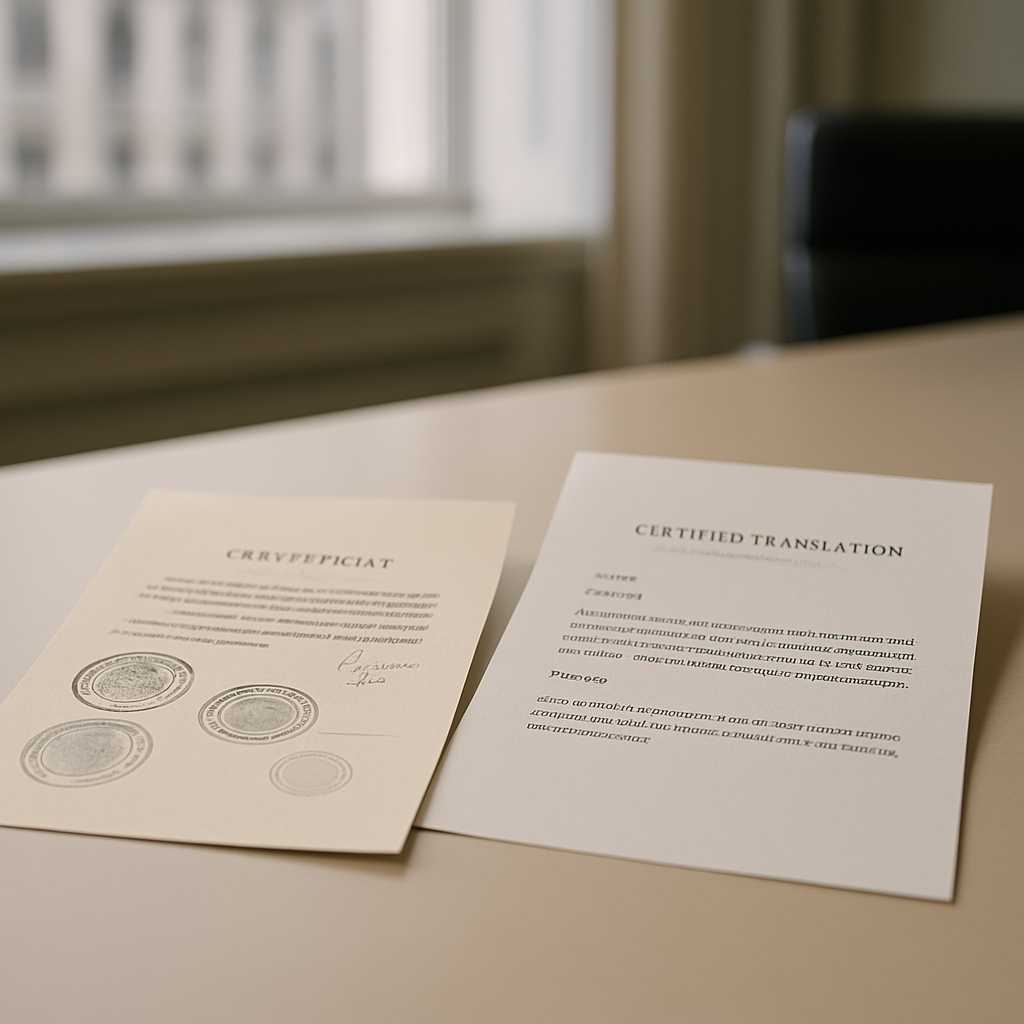
Stamps, Seals and Handwritten Notes: Should They Be Translated?
Yes. In most official-use cases, the safest approach is to reflect every visible element that carries meaning or helps validate the document. That includes readable stamps, seals, handwritten annotations, marginal notes, issue notes, registry remarks, and other non-English markings. In UK-facing document packs, the practical standard is not “translate the main text only,” but “submit a full translation that can be checked against the original.” (GOV.UK)
If a stamp or handwritten note contains readable words, translate it. If a seal is visible but has no readable text, describe it clearly. If part of it is obscured or unreadable, say so honestly. That is the difference between a translation that looks polished and a translation that is genuinely submission-ready.
For anyone searching translate stamps and seals UK, the short answer is this: do not leave visible foreign-language elements unexplained just because they sit in the margin, overlap a signature, or appear inside a round seal. Those details often help show who issued the document, when it was recorded, and whether it is complete.
Why These Details Matter More Than People Think
UK immigration guidance repeatedly refers to a full translation that can be independently verified, and caseworker guidance makes clear that where a required translation is missing or cannot be verified, the document may be treated as if it was not provided. That is why “small” untranslated elements are a bad gamble, especially when they affect authenticity, dates, authority names, or registry actions. (GOV.UK)
This matters beyond visa files too. The UK legalisation process itself is built around checking signatures, stamps, and seals against official records. If those elements are central enough to legalisation, they are central enough to be handled properly in any translation pack attached to the document. (GOV.UK)
In practice, reviewers want to compare source and translation without guessing. When a visible stamp says one thing, a handwritten note adds another, and the translated page ignores both, the file stops being easy to verify. That is where delays, clarification requests, and avoidable resubmissions begin.
The Safest Rule: Translate, Describe, or Flag
A strong certified translation handles non-body text with a simple three-part rule.
1. Translate It If It Contains Readable Words
- stamp text
- seal text
- registrar notes
- handwritten corrections
- margin annotations
- issue dates inside stamp impressions
- short notes such as “duplicate,” “cancelled,” “amended,” or “copy issued”
If the text is legible and meaningful, it belongs in the translation.
2. Describe It If It Is Visual But Still Relevant
- embossed seals
- signatures
- initials
- logos used as identifying marks
- coat-of-arms impressions
- dry seals with no readable wording
Examples:
- [Embossed seal]
- [Round seal: text not legible]
- [Signature]
- [Initials]
You are not inventing content. You are helping the reviewer understand what appears on the page.
3. Flag It If It Is Partly Unreadable
Use honest notations such as:
- [Illegible handwritten note]
- [Partial stamp, text obscured]
- [Embossed seal, wording not fully legible]
That is far better than guessing. A careful translator notes uncertainty instead of hiding it.
What Usually Needs to Be Reflected in the Final Translation
People often think only the typed body text matters. In reality, official documents are full of side information.
Common Elements That Should Not Be Ignored
- registry stamps
- ministry seals
- municipal office stamps
- university seals
- court filing stamps
- notarial marks
- handwritten amendments
- issue and reissue notes
- cancellation markings
- notes on the reverse side
- signatures and initials
- page numbers and annex references
- barcoded or stamped reference numbers when they contain text
A good rule is simple: if it helps explain origin, authenticity, status, or chronology, it should appear somewhere in the translation.
When a Stamp Should Be Translated and When It Should Be Described
This is where many weak translations fall apart.
Translate the Stamp When:
- the words are readable
- the stamp names an issuing authority
- it includes a date
- it records registration or filing
- it changes the legal meaning of the document
- it confirms a duplicate, amendment, correction, or certification
Describe the Stamp When:
- the impression is visible but unreadable
- it is an embossed mark without clear text
- it functions as a visual identifier rather than readable language
Do Both When Needed
Sometimes the best solution is hybrid wording:
- [Round stamp: Civil Registry Office, Warsaw, 12 March 2024]
- [Embossed seal of university; wording partially legible]
That is why seal descriptions and stamp impression notes are not optional extras. They are often the cleanest way to make the page understandable.
Handwritten Annotations Are Often the Real Risk Point
Handwritten notes are easy to miss and hard to decipher, which is exactly why they deserve attention.
They often include:
- corrections to names or dates
- duplicate issue remarks
- registrar initials
- filing comments
- reference numbers
- short approval notes
- notes confirming a status change
A document can look complete at first glance while a small handwritten addition changes the context entirely. A marriage certificate with a registrar note, a transcript with a handwritten correction, or a court page with a margin instruction should never be treated as decoration.
For official-use work, handwritten annotations should either be translated, described, or marked as illegible. They should not disappear.
A Simple Way to Handle Tricky Documents
Here is the working method that produces cleaner outcomes.
Step One: Review Every Edge of the Page
Check:
- top and bottom margins
- reverse pages
- overlapping seals
- back-page registry notes
- clipped corners in scans
- handwritten notes near signatures
- faint embossing visible only in angled scans
Step Two: Separate Content from Form
Ask:
- what is readable text?
- what is visual authentication?
- what is unclear?
Then assign each item to:
- translate
- describe
- flag
Step Three: Keep the Translation Easy to Compare
A reviewer should be able to move from the original to the translation line by line, note by note, mark by mark. That is why layout awareness matters. TS24 London’s own documents and services pages emphasise submission-ready formatting and specifically note visible stamps, seals, signatures, and handwritten notes where present. (Translation Services 24 London)
Examples of How a Strong Translation Should Read
Below are the kinds of bracketed notes that make a document easier to verify:
- [Round stamp: Registry Office, Madrid]
- [Handwritten note in blue ink: Duplicate issued on 18 June 2024]
- [Embossed seal: text not legible]
- [Signature]
- [Margin note: Entry corrected by order of the court]
These short translator notes are useful because they do not interrupt the document, but they do preserve what matters.
The Documents Where This Issue Comes Up Most Often
This problem appears again and again in:
Civil Documents
Birth certificates, marriage certificates, divorce decrees, death certificates, family books, and registry extracts often carry stamps, side notes, and later-entry corrections.
Academic Records
Diplomas and transcripts may have ministry seals, institutional round stamps, grading board notes, duplicate issue remarks, and rear-page authentication.
Police and Legal Papers
Police certificates, court orders, affidavits, judgments, powers of attorney, and legalised documents often include filing stamps, official seals, signatures, and handwritten clerk notes.
Immigration Supporting Documents
Bank letters, payslips, residence certificates, sponsor letters, and civil status records may all contain small notes that matter during review.
The Mistakes That Cause Preventable Delays
The most common failure is not mistranslating the main body text. It is leaving the margins silent.
Mistake 1: Translating the Document but Not the Stamp
A round seal with the issuing authority’s name is still text. If it is readable, it needs translating.
Mistake 2: Omitting Handwritten Notes Because They Are Short
Short does not mean unimportant. A two-word note can confirm amendment, duplication, cancellation, or registration.
Mistake 3: Guessing Unclear Text
A professional translation should never invent missing words. Mark uncertainty honestly.
Mistake 4: Ignoring the Back Page
Many certificates and academic records carry validation marks on the reverse side.
Mistake 5: Cleaning the Scan Too Aggressively Before Sending It
Over-cropping, contrast filters, and flattened phone scans can erase embossing and faint seal detail. If your document has dense seals, low-ink handwriting, or rear-page notes, send the full file before editing it yourself. Upload your file before you crop or enhance it. A fast quote is useful, but a readable source file is what prevents rework later.
What “Submission-Ready” Looks Like in Practice
A strong official translation usually has four qualities:
It Is Complete
The main text, side text, seal text, handwritten annotations, and visible notes are all accounted for.
It Is Honest
Unclear elements are labelled as unclear, not guessed.
It Is Easy to Compare
The translated version mirrors the structure of the original where possible.
It Is Properly Certified
UK-facing official translations generally need certification wording, date, signature, and contact details so they can be independently checked. (GOV.UK)
This is one reason TS24 London positions its service around certified human translation, submission-ready formatting, clear turnaround options, and secure handling, rather than simple word conversion alone. (Translation Services 24 London)
When Stamps and Seals Matter Even More: Apostilles, Courts, and Official Packs
If your document is going abroad, being legalised, or forming part of a court or regulator bundle, stamps and seals become even more important. The UK legalisation process depends on matching signatures, stamps, and seals to official records, so these elements are not cosmetic details. They are part of the document’s authority trail. (GOV.UK)
That does not mean every file needs notarisation or an apostille. It means the translation should not create uncertainty around visible official markings. Translation, notarisation, certification, and legalisation are different steps. Mixing them up is expensive. Handling them in the right order is efficient.
Why Clients Use TS24 London for Document-Heavy Files
TS24 London’s site focuses on certified human translation prepared for official submission, including UKVI, Home Office, court, university, and corporate use, with standard 24-hour delivery and same-day options where available. Its documents page also explicitly says visible stamps, seals, signatures, and handwritten notes are indicated where present. (Translation Services 24 London)
As part of the wider TranslationServices24 group, the brand also points to 15+ years in business, 200+ languages, a network of 8,000+ translators, ATC membership, CIOL and ITI-qualified translators, ISO 17100 alignment, and strong review volume. Trustpilot currently shows Translation Services 24 at 4.9 out of 5 from 176 reviews, with recent reviewers repeatedly highlighting quick turnaround, clear communication, careful amendments, and good formatting for official-use files. (Translation Services 24)
If your document includes dense seals, faint embossing, or difficult handwritten notes, the best next step is simple: send the full scan, mention the deadline, and ask for the document to be prepared for official submission rather than basic translation only. That saves time, reduces ambiguity, and gives the translator a chance to flag anything unreadable before the file reaches the authority.
A Final Rule Worth Remembering
If the reviewing body can see it, your translation should deal with it. Not every visible mark must become a full sentence. But every meaningful visible mark should be translated, described, or flagged. That is the standard that keeps a file clear, credible, and easier to accept.
Need a quote today? Upload the complete scan, including reverse pages and faint seal areas, and ask for a certified translation prepared for official submission. For urgent cases, mention the deadline at the start so turnaround and formatting can be planned around the real use of the document. (Translation Services 24 London)
FAQs
Do I need to translate stamps and seals for UK applications?
In most official-use situations, yes. If the stamp or seal contains readable foreign-language text, it should normally be translated. If it is visible but unreadable or purely embossed, it should usually be described clearly rather than ignored. UK guidance refers to a full translation that can be independently verified, which is why leaving visible foreign-language elements unexplained is risky. (GOV.UK)
Should handwritten notes be translated in a certified translation?
Yes, where they are readable and relevant. Handwritten annotations often include corrections, duplicate issue notes, filing remarks, initials, or registry actions. If they are unclear, they should be marked as illegible or partially legible rather than omitted.
What if the seal is embossed and I cannot read the words?
The translator should describe it honestly, for example: [Embossed seal] or [Embossed seal, text not legible]. A good translation should not invent unreadable wording.
Can I ignore a small stamp if the main document is already in English?
That is usually a bad idea if the stamp itself is in another language and adds meaning, especially where it identifies the issuing authority, date, filing action, or official status. Canada’s immigration guidance explicitly states that non-English or non-French stamps and seals must also be translated, which reflects the wider best-practice standard for official-use document packs. (Canada)
Are seal descriptions and translator notes acceptable?
Yes. Short bracketed notes are a standard practical way to show visible elements that are important but not part of the running body text. The key is that they should be clear, restrained, and accurate.
Will a certified translation also cover signatures and initials?
Usually yes, by indicating them as [Signature], [Initials], or similar, unless the name itself is clearly readable and relevant. The aim is to preserve what appears on the page without guessing.

