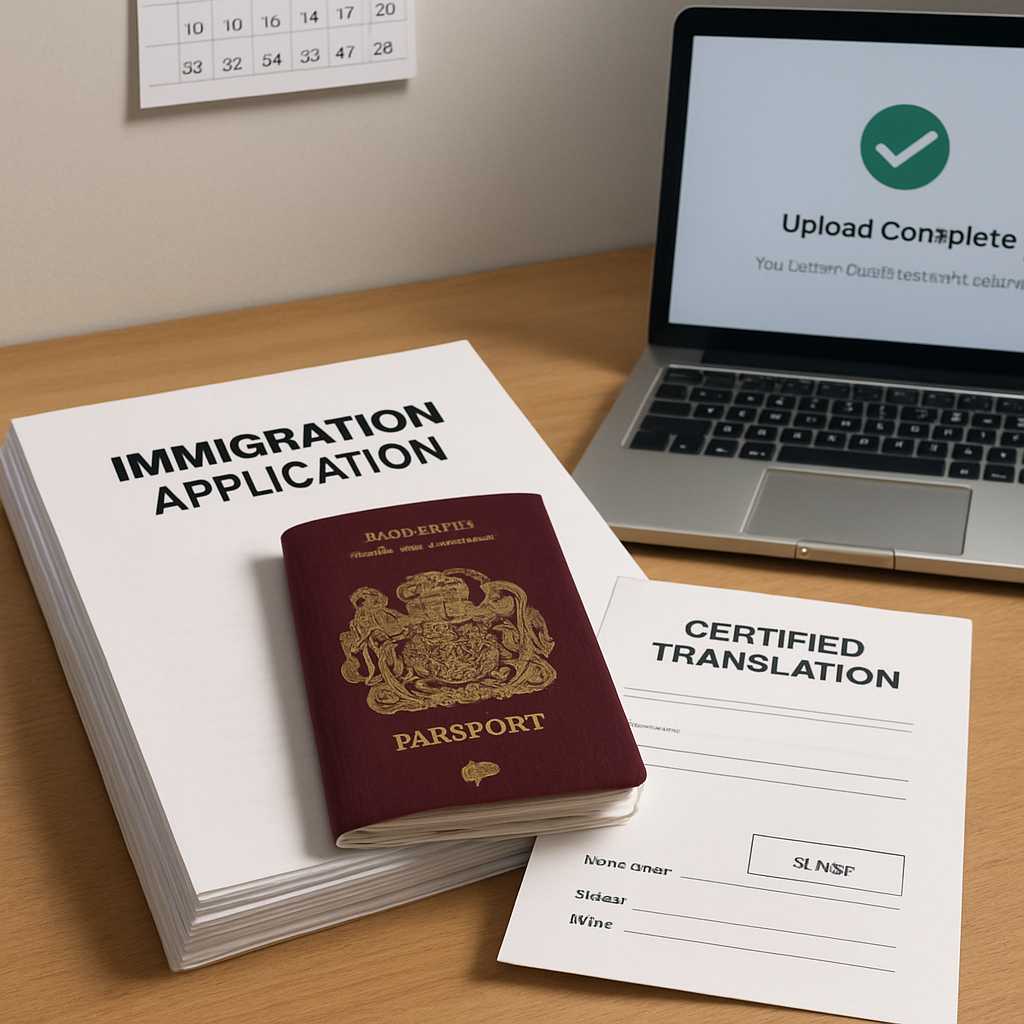
Urgent Immigration Deadlines: What to Prioritise First
When a visa, settlement, citizenship, sponsorship, or family application is moving quickly, the biggest mistake is treating every document as equally urgent. The smartest approach is to prioritise the documents that can halt the application process, ensure every non-English or non-Welsh document has a properly certified translation, and submit readable files from the outset. This is where urgent immigration translation tips become genuinely beneficial: not in adding panic, but in reducing avoidable delays.
If you are facing a tight deadline, start with the essentials. Gather the original document set, separate the items that are actually required from those that are merely helpful, and prioritize your decision-critical documents for translation. If speed is essential, consider using TS24’s immigration document translation service alongside urgent translation services to ensure the project is scoped around the actual deadline rather than a generic turnaround.
What Matters Most When the Deadline is Close
In urgent immigration cases, there are typically four key factors to consider in the initial phase:
- The right documents
- The right order
- The right certificate wording
- The right scan quality
Most delays stem from errors in these areas, not because the document was impossible to translate, but due to sending the wrong file first, having an incomplete translation certificate, or providing scans that are unclear. Home Office guidance consistently emphasizes the importance of certified translation requirements, and some supporting-document routes specify readability and file-format expectations.
Prioritise Documents in This Order
1) Translate Identity and Status Documents First
These are typically the documents that anchor the entire application:
- Passport pages or ID documents
- Birth certificates
- Marriage certificates
- Divorce papers
- Change-of-name records
- Residence cards or status records
If a name, date of birth, family relationship, or identity trail cannot be clearly followed across your file set, everything else becomes more challenging to assess. Therefore, these documents should be prioritized, even ahead of useful but secondary evidence.
2) Move Next to Documents that Prove Eligibility
After identity documents, focus on those that support the actual immigration route:
- Employment letters
- Academic records
- Police certificates
- Bank statements
- Tenancy or accommodation evidence
- Sponsorship paperwork
- Relationship evidence where relevant
Applicants often waste time by translating every page in a bundle before confirming what is truly needed. A more effective approach is to identify which documents prove the rule first and then add supporting evidence around them.
3) Leave Helpful but Non-Essential Extras Until the Core File is Covered
Urgent work improves when you categorize documents into three stacks:
- Must submit now: Documents without which the application cannot be properly assessed.
- Should submit if available: Documents that strengthen the case or answer likely questions.
- Can follow if requested: Background material, duplicates, historical papers, or low-value annexes.
This triage method is one of the most practical urgent immigration translation tips because it prevents the translator’s time from being spent on low-impact files while key evidence is still pending.
The Quickest Way to Avoid a Preventable Refusal or Delay
A fast translation is not synonymous with a submission-ready translation. For UK immigration-related use, the translation should be complete, verifiable, and accompanied by the certification details expected by the Home Office. These details include confirmation that the translation is accurate, the date of translation, the translator’s full name and signature, and contact details. Caseworker guidance clearly states that if a required translation is not supplied or cannot be verified, the document may not be accepted.
A Practical Certificate Wording Checklist
Before submission, ensure that the translation package includes:
- Confirmation it is a true and accurate translation of the original
- Translation date
- Translator’s full name
- Signature or authorized sign-off
- Translator or translation company contact details
If even one of these elements is missing, the issue is rarely discovered at the quote stage. It usually surfaces later when the applicant assumes the file is ready and then learns something needs to be redone.
Why Scan Quality Matters More Than People Expect
Applicants under pressure often focus on wording and overlook the image itself. However, unreadable scans create the same operational problem as poor translation: the caseworker or receiving authority cannot confidently use the evidence. Therefore, scan quality should be treated as part of the immigration checklist, not as an afterthought.
Quick Scan Quality Rules for Urgent Cases
Before sending files to your translator, check that:
- Every corner of the document is visible
- Stamps, seals, signatures, and handwritten notes are legible
- Nothing is cropped at the top or bottom
- Double-page spreads are separated properly
- Mobile photos are flat, straight, and well lit
- File names make sense at a glance
- Each page is in the correct order
A clean scan can save hours, while a poor scan can waste them.
Supporting Documents That Commonly Slow Urgent Cases Down
Some documents are slow not because they are lengthy, but because they are messy. The usual culprits include:
Civil Status Records with Handwritten Notes
Birth, marriage, divorce, and registry extracts often contain marginal notes, stamps, annotations, or multilingual formatting. These details matter and need to be reflected accurately.
Bank Statements and Financial Evidence
These may appear straightforward, but urgent cases often involve multiple pages, inconsistent formatting, transaction references, and date-sensitive evidence.
Police Certificates and Court-Related Records
Terminology must be handled with care, and names, numbers, and issue dates need to match the rest of the file exactly.
Education and Employment Evidence
These are common in work, study, and recognition routes. Problems usually arise when names differ slightly across certificates, passports, and employer letters.
Documents with Low-Quality Photos or Scans
A poor source file almost always slows the job down because the translator needs clarification before certifying the final version.
What to Send Your Translator if the Deadline is Serious
A rushed instruction like “please translate this urgently” is insufficient. A better brief removes guesswork. Send these five things together:
- The exact deadline: Specify when the translation is needed, not just that it is urgent.
- The receiving authority: Home Office, UKVI, employer, university, solicitor, embassy, or another body.
- The purpose of the document: Visa application, sponsorship, settlement, spouse route, nationality, right-to-work evidence, or appeal bundle.
- The full file set: Include every page, even if one page appears blank or repetitive.
- Any name spellings already used elsewhere: Especially if you have English spellings on a passport, BRP, prior application, or official letter.
This is one of the most overlooked urgent immigration translation tips: the clearer the context, the faster the project manager can prioritize correctly.
Certified, Notarised, or Legalised: Which One Should Come First?
For many UK immigration submissions, a properly certified translation is the key requirement. Notarisation or legalisation is not automatically the first step unless the receiving authority specifically requests it. This distinction is important because people often lose time and money by ordering extra formalities too early.
A Better Way to Think About Urgency
The strongest urgent applications are not those translated the fastest at any cost, but those translated in the right sequence. A practical triage model looks like this:
- First hour: Identify required originals, separate must-have documents from nice-to-have evidence, and flag unreadable scans.
- Next step: Send the highest-priority documents for certified translation first.
- Then: Check the certificate wording and delivery format before translating the remaining bundle.
- Finally: Review names, dates, reference numbers, and page order across the full set.
This approach is more effective than generic “fast translation” advice because it reflects how real immigration bottlenecks occur: the issue is typically sequencing, not just speed.
A Submission-Ready Checklist for Urgent Immigration Files
Before you upload or send anything, run through this checklist:
- Original documents are complete
- Every required non-English or non-Welsh document has a certified translation
- The certificate wording is complete
- Names match passport spellings
- Dates and document numbers are consistent
- Scan quality is clear across all pages
- File names are organized logically
- No duplicate family documents are being translated unnecessarily where one shared set is acceptable
- You know whether digital delivery is sufficient or if a hard copy is also needed
For visitor applications, GOV.UK guidance also notes that family or group applicants applying simultaneously do not need to provide multiple copies of the same documents, which can save unnecessary duplication in some cases.
When the Deadline is Close, Get the Right Help Early
If you already know the file is for official use, do not wait until the rest of the application is perfect before ordering the translation. Start the translation process as soon as the required documents are known. This allows time to address certificate issues, spelling mismatches, and scan problems while there is still room to fix them.
For urgent cases, the most natural route is to direct readers toward TS24’s urgent translation service, supported by certified translation services, immigration document translations, and the wider translation process page. TS24 is a London-based provider working in over 200 languages, with more than 15 years in business, an 8,000+ linguist network, and strong public review signals, which are exactly the reassurance points deadline-driven readers seek.
“TS24 is always our go-to agency for translation services. We find them very professional, hands-on, and flexible with the way they offer their solutions.”
If the goal is to transform a stressful immigration deadline into a controlled process, the priority is clear: translate the documents that unlock the application, ensure the certification is complete, and never allow poor scans to undermine good work.
FAQs
Do I need a certified translation for every immigration document?
You need a certified translation for documents that are required for the application and are not in English or Welsh. The safest approach is to confirm which documents are mandatory for your route, then ensure those are translated first.
What certificate wording should a UK immigration translation include?
A compliant translation should include confirmation that it is an accurate translation of the original, the date of translation, the translator’s full name and signature, and contact details for the translator or translation company.
Can poor scan quality delay an urgent immigration application?
Yes. If the original scan is blurred, cropped, shadowed, or difficult to read, it can slow translation and make the final evidence less usable. Some Home Office document-submission guidance explicitly requires readable files in accepted formats.
Should I order notarisation as well as certified translation?
Not automatically. Many UK immigration cases primarily require certified translation. Notarisation or legalisation is usually only worth adding when the receiving authority specifically requests it.
What are the best urgent immigration translation tips for avoiding last-minute problems?
Prioritise identity and eligibility documents first, send clear scans, provide the translator with the real deadline and purpose, and check certificate wording before submission. These steps help prevent most avoidable delays.
Can one family use the same supporting documents in a visitor application?
For certain visitor applications made as a family or group at the same time, GOV.UK states that you do not need to provide multiple copies of the same documents.

