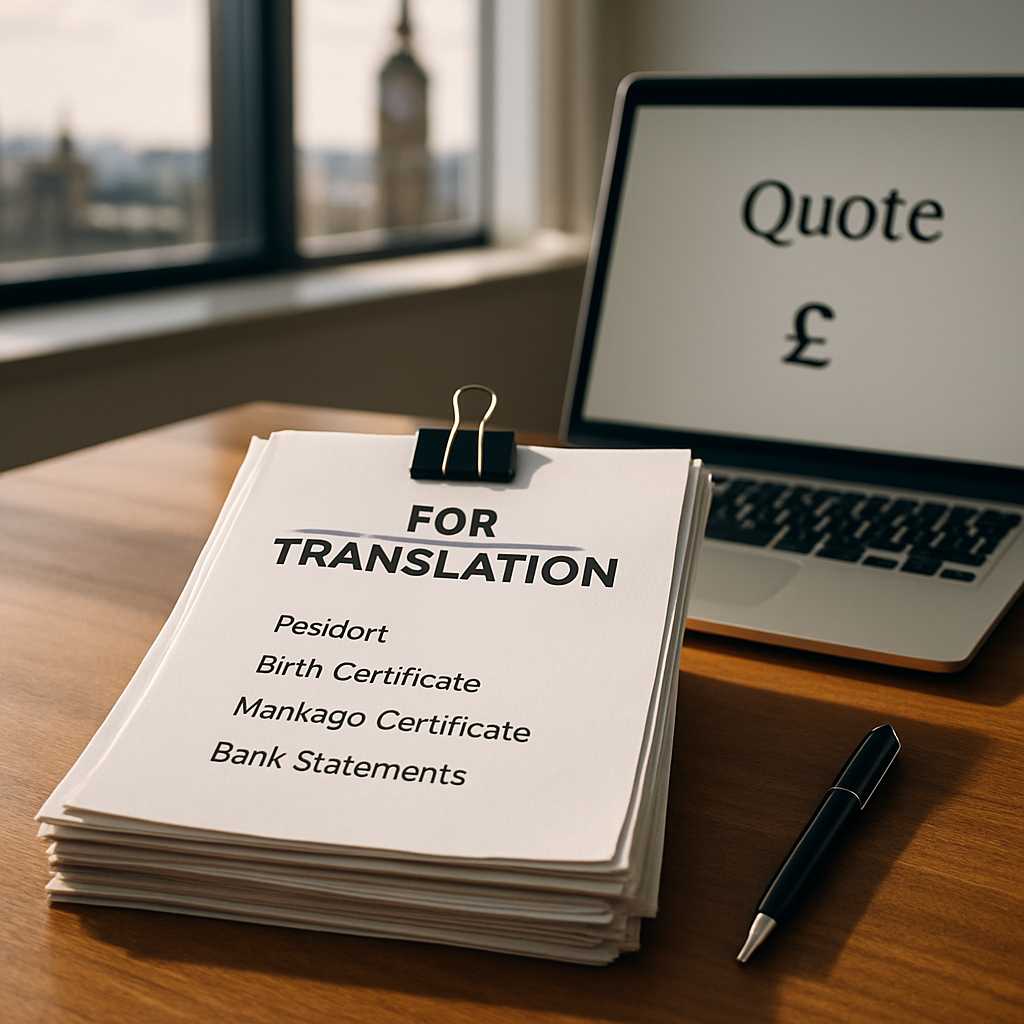
How to Reduce Rush Fees: Smart Ways to Bundle Documents for Translation
Rush fees usually appear when a translation job arrives late, scattered across multiple emails, or split into separate mini-projects that each need their own setup, review, formatting, and delivery plan. The smarter move is to bundle documents for translation in a way that helps the translator work faster, more consistently, and with fewer interruptions.
That does not mean sending every file you have in one giant dump. It means grouping the right documents together, giving one clear brief, and letting the project move through one organised workflow instead of five fragmented ones.
If your goal is lower costs, faster processing, and fewer revisions, bundling is often the simplest fix. In one sentence: the best bundle is a group of documents that share the same purpose, deadline, language pair, terminology, and delivery requirements.
Need a clear price before you commit? Send the full set in one go and ask for a single review, a single terminology check, and one delivery plan.
Why bundling documents can reduce rush fees
Rush charges are rarely about speed alone. They usually reflect disruption. When documents arrive one by one, the provider may need to:
- reopen the project repeatedly
- recheck names, dates, and reference numbers
- rebuild formatting instructions
- reassign linguists or reviewers
- repeat certification steps
- issue multiple delivery batches
When related files arrive together, much of that repeated admin disappears. That makes it easier to plan capacity, keep terminology stable, and avoid paying for preventable rework.
Where the savings usually come from
1. One project setup instead of several
A bundled order gives the team one brief, one client instruction set, and one target outcome.
2. Better batch pricing logic
When similar documents are handled together, pricing is often easier to structure fairly than when the same job is broken into separate urgent fragments.
3. Consistent terminology across the whole pack
Repeated names, addresses, institutions, legal phrases, and document labels can be handled once and reused correctly throughout the project.
4. Fewer revisions
A good bundle reduces the chance that page two says one thing and page six says another because different files were translated at different times.
5. Faster final QA
Review is smoother when the reviewer can compare the full pack together rather than checking isolated documents out of sequence. Smart bundling does not just reduce cost. It reduces friction.
The best way to bundle documents for translation
The most effective bundle follows five matching rules.
Match the purpose
Bundle documents that are being submitted for the same application, case, transaction, or review. Good examples include:
- visa application pack
- marriage or civil status pack
- academic admissions pack
- mortgage or financial evidence pack
- company registration or legal compliance pack
Match the deadline
If all documents are needed for the same appointment or submission date, they belong in the same quote request. If one file is needed today and the rest next week, split them.
Match the certification level
Do not mix standard business translation, certified translation, notarised translation, and apostille-related work in one vague request without making the requirements clear. Bundling works best when the output requirements are aligned.
Match the language pair
If everything is Spanish to English, the workflow is simpler than if half the pack is Arabic to English and the rest is Italian to English. Mixed language pairs can still be bundled commercially, but they should be labelled clearly.
Match the terminology
Documents that repeat the same people, places, institutions, or legal and financial terms are ideal for bundling because consistency becomes easier and quicker to control.
What should be bundled together
Personal document bundles
These are often the easiest to group because they usually support one life event or one official process. Examples include:
- passport
- birth certificate
- marriage certificate
- divorce certificate
- police certificate
- proof of address
- bank statements
A person applying for immigration, a visa, or family registration often saves time by sending the whole pack together instead of uploading one certificate at a time over several days.
Academic bundles
These usually benefit from one shared review because names, institutions, grading terms, dates, and course titles often repeat. Examples include:
- degree certificate
- diploma
- academic transcript
- enrolment letter
- reference letter
Financial bundles
These work well when the same names, account details, employers, or institutions appear across multiple files. Examples include:
- bank statements
- payslips
- tax records
- mortgage letters
- company accounts
Legal or case bundles
These need more care, but bundling can still be very effective when the documents relate to the same matter. Examples include:
- contracts
- witness statements
- powers of attorney
- court-related correspondence
- supporting exhibits
For legal packs, the biggest advantage is usually consistent terminology rather than simple speed.
When bundling is a bad idea
Bundling only works when it creates clarity. It stops working when it creates confusion.
Do not force one bundle when:
The deadlines are different
If one document must be filed today and the rest later, keep the urgent part separate.
The recipients are different
A university pack and a court pack may need different presentation, tone, or certification expectations.
The files are unrelated
A passport, a product manual, and a marketing brochure do not belong in the same bundle just because they were found in the same folder.
The scans are poor
Low-quality files slow everything down. If the source is hard to read, the project may need extra checking before translation can start.
The documents are likely to change
If you already know one contract draft will be updated tomorrow, do not push it into today’s urgent bundle unless you want to risk paying twice.
A simple test: should these files stay together?
Use this quick check.
| Question | If the answer is yes | If the answer is no |
|---|---|---|
| Are these for the same submission or case? | Keep together | Split |
| Do they share the same deadline? | Keep together | Split |
| Do they repeat the same names and terms? | Keep together | Probably bundle |
| Do they need the same certification level? | Keep together | Split or flag clearly |
| Are all files final and readable? | Keep together | Fix first |
How to prepare a bundle so it moves faster
Bundling helps most when the pack is organised before it is sent.
1. Put everything in one folder
Use a single folder or zip file instead of sending separate attachments across multiple emails.
2. Rename files clearly
A good file name helps the project manager understand the pack immediately. Examples:
- 01-passport.pdf
- 02-birth-certificate.pdf
- 03-marriage-certificate.pdf
- 04-bank-statement-january.pdf
3. Add one instruction note
A short note can prevent a surprising amount of delay. Include:
- target language
- purpose of translation
- deadline
- whether certification is needed
- whether you need PDF only or hard copy too
- correct spellings of names as they should appear in English
4. Flag repeated terminology
If a company name, university name, court reference, or specialist term appears across multiple files, mention it once at the start. That can reduce revisions later.
5. Separate final versions from old versions
Nothing increases avoidable rework faster than sending two similar files and not saying which one is current.
6. Tell the provider the full scope upfront
Do not hold back half the documents “for later” if you already know they will be needed. A partial brief often leads to partial planning, then urgent add-ons, then extra cost.
The hidden reason bundled jobs often get fewer revisions
Most people think bundling is mainly about price. In practice, one of the biggest advantages is quality control. When related files are reviewed together, the translator and reviewer can align:
- personal names
- place names
- institutional titles
- legal phrases
- financial labels
- formatting style
- dates and number presentation
That matters because revision costs are not only financial. They also cost time, confidence, and sometimes submission windows.
Consistency matters most in these document groups
Family and civil documents
Parents’ names, places of birth, registry details, and document numbers must line up across the whole pack.
Academic records
Course titles, department names, grade terminology, and dates must stay stable from certificate to transcript.
Financial evidence
Employer names, account labels, statement periods, and totals must remain consistent across all translated pages.
Legal papers
Defined terms, parties, clause references, and document labels should not shift from one file to another.
A smarter way to ask for a quote
If you want the best chance of a lower rush fee, do not ask for five separate prices. Ask for one structured quote. Use a request like this:
I want to bundle documents for translation for the same application. Please quote this as one project, confirm the fastest standard turnaround, and advise whether any file should be separated due to certification or deadline differences.
That one sentence tells the provider you are thinking in workflow terms, not just attachment terms.
Ask these questions before approving
- Can these files be handled as one project?
- Which documents should stay together?
- Which, if any, should be split?
- Will repeated terminology be reviewed across the whole pack?
- Is the proposed turnaround based on the full bundle, not only the first files received?
- Are certification and delivery included?
- Will the final documents arrive in one organised batch?
Practical examples of smart bundling
Example 1: The visa pack
A client needs a passport, birth certificate, marriage certificate, and three bank statements translated for one application. Best approach: submit the full set together, confirm the exact submission purpose, and request one delivery schedule. Why it works: names, dates, addresses, and institutions can be checked once and kept consistent throughout.
Example 2: The family update
A family sends one parent’s documents now, then the spouse’s documents two days later, then the child’s certificate after that. Better approach: wait until the full family pack is ready if the deadline allows. Why it works: the translator can keep surnames, place names, and registry terminology aligned across the entire set.
Example 3: The mixed-priority legal matter
A contract is needed urgently today, but supporting exhibits are not required until next week. Best approach: split the contract from the rest. Why it works: bundling everything would make the urgent core document carry the cost pressure of the whole pack.
The best bundle strategy for lower fees
If you remember only one thing, remember this: Bundle by workflow, not by file count. The cheapest-looking approach is not always the cheapest overall. Sending documents one by one can feel flexible, but it often creates:
- repeated admin
- duplicated checks
- inconsistent terminology
- preventable revisions
- last-minute urgency
The better approach is to build one clean, final pack around one real purpose. If your documents belong together, send them together. If they do not, separate them clearly. That is how you reduce rush pressure without increasing risk.
A practical checklist before you upload your files
Before you send your pack, check that you have done the following:
- grouped documents by purpose
- confirmed which versions are final
- named files clearly
- stated the target language
- stated the deadline
- confirmed whether certification is needed
- noted any names or terms that must stay identical
- said whether you need digital delivery, hard copy delivery, or both
Ready to move forward? Upload the full document pack once, ask for one coordinated review, and request the most efficient delivery plan for the whole set rather than treating each file as a new emergency.
FAQs
Can I bundle documents for translation if they are different file types?
Yes. PDF, scanned images, Word files, and photo-based documents can often be handled in one project if they share the same purpose, deadline, and language pair. The key is to label them clearly and state any formatting concerns upfront.
Does bundling documents for translation always reduce the price?
Not always. Bundling usually helps when the documents belong to one workflow and share repeated terminology or admin steps. It may not reduce the price if the files need different certification levels, different translators, or very different deadlines.
What is the best way to bundle documents for translation for a visa or official application?
Group all supporting documents for the same application in one pack, list them in order, include one note with your deadline and target language, and confirm whether you need certified PDF, hard copy, or both.
Can bundling documents make translation faster?
Yes, when the files are related and ready to go. A well-prepared bundle can speed up briefing, terminology management, review, formatting, and final delivery. A badly organised bundle can do the opposite.
Should I send bank statements separately from certificates?
Usually not if they support the same application and share the same timeline. They can often be quoted and managed together, especially when names, addresses, and institutional details repeat across the pack.
When should I avoid bundling documents for translation?
Avoid bundling when the files have different deadlines, different certification needs, different recipients, or are still being revised. In those cases, splitting the work usually gives you more control and fewer delays.

