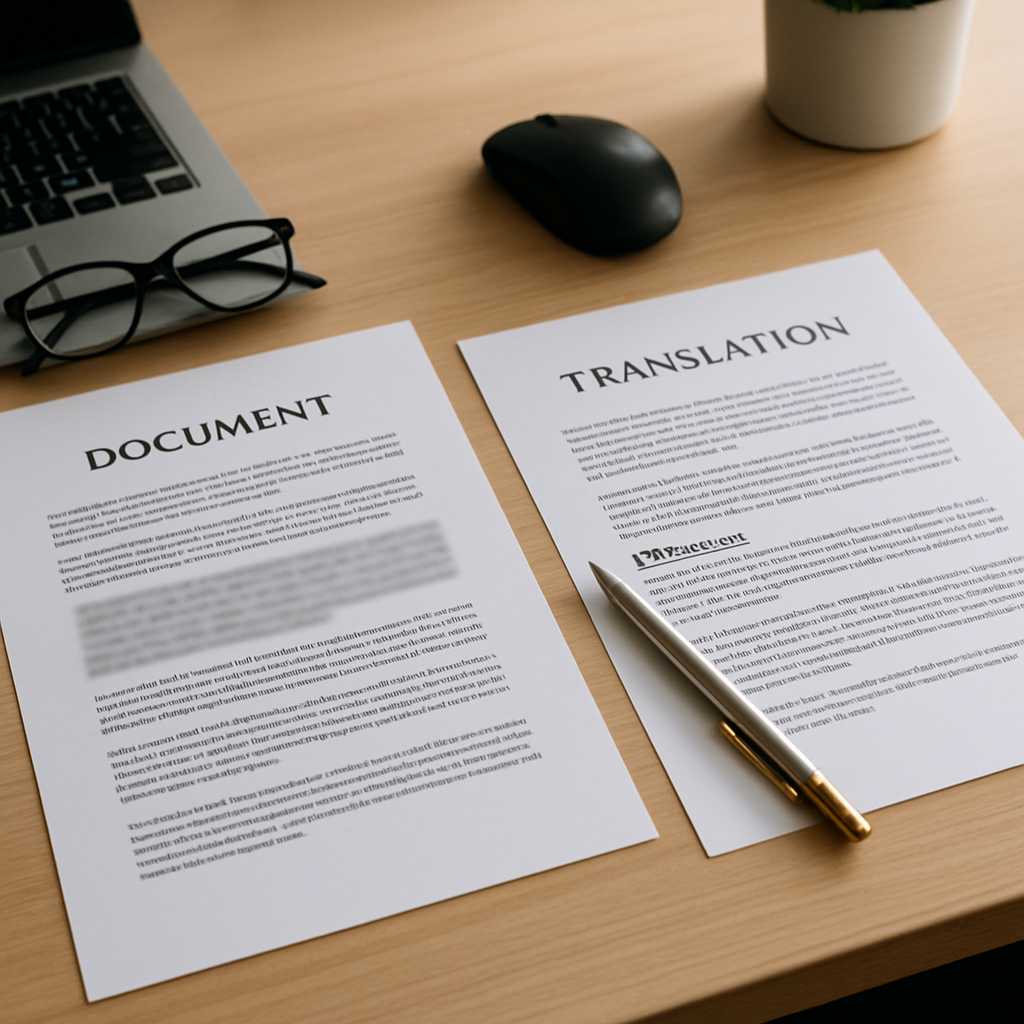
Illegible Text: What a Professional Translation Should Say
If you are dealing with a birth certificate, passport page, court record, bank statement, police certificate, or handwritten official document, an illegible text translation note can be the difference between a professional submission and a risky one. When parts of the source document are blurred, cropped, smudged, stamped over, faint, or handwritten so badly that they cannot be read with confidence, a proper translation should never guess.
A professional translation should do three things at once: translate everything that is readable, clearly mark what is not, and make it obvious that the problem comes from the source document rather than the translator. That is where the right translator note, a timely rescan request, and precise compliance wording matter most.
A Professional Translation Should Record Uncertainty, Not Hide It
Unreadable text is not unusual in official document work. It appears in faded registry stamps, shadowed scans, handwritten amendments, signature blocks, poor mobile photos, folded corners, and low-resolution PDFs. The problem is rarely that the document is “untranslatable.” The real problem is how the uncertainty is handled.
A professional translator does not repair missing evidence; they document it. That means:
- readable text is translated faithfully
- unreadable text is marked transparently
- partially readable text is handled cautiously
- material gaps trigger a rescan request instead of a silent guess
- the final translation shows where the uncertainty sits
This protects the client, the receiving authority, and the translator’s certification.
What an Illegible Text Translation Note Is Actually For
An illegible text translation note is not filler; it serves a clear purpose. It tells the reader:
- the original document contains content that cannot be read confidently
- the translation has not invented or “cleaned up” missing words
- the translator has identified the issue openly
- the translated file remains faithful to the source as provided
For official use, that distinction matters. A blurred stamp, faint handwritten date, or unreadable margin note should never be silently normalized into smooth English. If the source is unclear, the translation must show that the source is unclear.
What a Professional Translation Should Say
The exact wording varies slightly by document type, but the safest practice is plain, neutral wording in square brackets or in a short translator’s note.
Common Bracketed Notes
Use short notes inside the body of the translation where the problem appears:
- [illegible]
- [illegible text]
- [illegible handwriting]
- [partly illegible]
- [signature]
- [illegible signature]
- [round stamp: partly illegible]
- [handwritten note: partly illegible]
These notes work best when the issue is local and obvious.
When Partial Readability Needs More Precision
If only part of the text can be read, the translation should reflect only what is visible. Examples include:
- [handwritten note: date partly legible]
- [stamp: issuing authority partly illegible]
- [partially legible entry; only the reference number is readable]
The point is not to sound clever; the point is to be exact about what is known and what is not.
When a Longer Translator Note Is Better
A longer translator note is better when the problem affects a key field or appears more than once. Example wording includes:
Translator’s note: One handwritten entry in the source document is partly illegible in the copy provided. Only the visible text has been translated. No missing wording has been inferred.
Translator’s note: The source document contains a stamp impression that is only partly readable. The legible portion has been translated, and the unreadable portion has been marked accordingly.
Translator’s note: A clearer scan was requested for the highlighted section because the handwritten amendment could not be read with sufficient certainty from the copy supplied.
This kind of compliance wording is strong because it is neutral, accurate, and defensible.
When a Rescan Request Is the Right Answer
Not every unclear section should be handled with a simple note and moved on. Sometimes the correct professional response is to pause and request a better copy. A rescan request is usually the right choice when the unreadable section affects:
- full names
- dates of birth
- document numbers
- case numbers
- issue dates
- expiry dates
- financial totals
- registry references
- issuing authority details
- handwritten amendments that change meaning
If the blurred section sits inside the very information the receiving authority is likely to verify, a note alone may not be enough. A cleaner scan often saves more time than a rushed translation followed by rejection or rework.
If your file contains any of those problem areas, send it for a quick review before ordering. TS24 can tell you whether it is ready for certified translation services as it stands or whether a short rescan will give you a cleaner, safer result.
Partial Readability Is Where Professionalism Shows
The grey area is not full illegibility; it is partial readability. This is where weaker providers take risks. A word “seems” to say one thing. A stamp “looks like” a ministry name. A handwritten surname “might be” one of two spellings. In official work, “might be” is not good enough.
A professional approach separates three situations:
1. Fully Readable
Translate it normally.
2. Fully Unreadable
Mark it clearly as illegible.
3. Partly Readable
Translate only what is genuinely legible, then flag the missing portion.
That middle-ground discipline matters. It prevents avoidable errors in identity documents, legal records, and supporting evidence packs.
What a Professional Translation Should Never Do
A reliable provider should never:
- guess unreadable words to make the sentence look complete
- silently correct blurred names, dates, or numbers
- omit an unclear stamp, seal, or handwritten note without marking it
- replace uncertainty with smooth paraphrasing
- certify a crucial unreadable field as though it had been fully verified
If the original is unclear, the translation must show that clearly. The translator’s job is accuracy, not reconstruction.
Stamps, Seals, Signatures, and Handwritten Notes Still Matter
Clients sometimes assume unreadable stamps or signatures can be ignored. That is a mistake. In official documents, non-body text often carries weight. A registry stamp, court seal, handwritten amendment, or side annotation may affect authenticity, chronology, or meaning. Even where a signature itself is not transcribed letter by letter, it should still be acknowledged.
Typical treatment looks like this:
- signature present and not read as text: [signature]
- signature image unreadable: [illegible signature]
- official stamp readable: translate its content
- official stamp partly readable: [round stamp: partly illegible]
- handwritten side note affecting meaning: translate the visible words and mark the rest clearly
For court-facing or evidence-heavy work, this is especially important. Where documents form part of litigation or formal records, TS24’s legal translation services are the safer route.
Can a Document Still Be Certified If Part of It Is Illegible?
Sometimes yes. Sometimes no. The answer depends on what is illegible. A translation can often still proceed where the unreadable section is minor, such as:
- a decorative stamp edge
- an incidental scribble
- part of a signature image
- a non-essential marginal mark
- a faint seal border with the main text still readable
A better copy is usually needed first where the unreadable section affects:
- identity details
- key dates
- document numbers
- authority names
- financial figures
- operative legal wording
- handwritten amendments or corrections
That is why difficult files should be reviewed before final certification. If timing matters, combine file review with urgent translation services so you do not lose days to preventable back-and-forth.
A Practical Workflow That Prevents Problems
When you want a professional result, this is the simplest way to handle an unclear document.
Send the Best Copy First
Use a flat, uncropped, well-lit scan. PDF is ideal. Avoid camera flash, shadows, fingers in frame, and folded corners.
Say Where the Translation Will Be Used
A translation for a visa file, court bundle, university submission, or overseas authority may need slightly different handling.
Flag Any Area You Already Know Is Hard to Read
If there is a faint stamp, a handwritten side note, or a blurred final line, say so at the start.
Let the Translator Decide Whether a Note or Rescan Is Needed
A professional provider will tell you whether the file is good enough to certify as supplied.
Check the Treatment of Uncertain Areas Before Final Issue
The final version should show a consistent system for brackets, notes, and certification wording. If you are not sure what your file needs, start with TS24’s complete guide to certified translations or request a review alongside translation prices so you can see turnaround and cost early.
Three Real-World Examples of the Right Approach
Birth Certificate with a Blurred Registrar Stamp
The body text is readable, but part of the circular stamp is faint. Best treatment:
- translate the readable certificate content in full
- render the visible stamp text
- mark the unreadable remainder as partly illegible
Poor treatment:
- ignore the stamp completely
- invent the missing wording from context
Bank Statement with Shadow Over One Transaction Line
Most of the page is clear, but one row is dark and partly obscured. Best treatment:
- translate all readable entries
- mark the affected line as [partly illegible]
- request a cleaner PDF if the obscured line is likely to matter to the receiving authority
Poor treatment:
- leave the line out
- estimate the amount from surrounding entries
Court Order with Handwritten Amendment
The typed order is legible, but a handwritten change near the signature block is difficult to read. Best treatment:
- translate the typed text
- isolate the handwritten change
- if not fully readable, request a rescan before certification
- if still unclear, note exactly what is visible and what is not
Poor treatment:
- smooth the amendment into the typed wording
- pretend the change is not there
Why This Matters for Official Submissions
Officials compare documents. They do not just read them. They look at names, dates, seals, references, and whether the translation appears complete and professionally handled. A clear illegible text translation note helps in three ways:
- it shows that the translator noticed the issue
- it shows that no missing text was invented
- it keeps responsibility where it belongs: with the source document, not the translation
That makes the translation easier to trust.
Why Clients Choose TS24 for Difficult Document Files
When a document is straightforward, many providers can handle it. When the file contains blurred stamps, marginal notes, handwritten text, cropped edges, or partial readability, experience matters more. TS24 supports official document work through:
- certified translation services for formal submissions
- passport translation services for ID and travel documents
- notarised translation services when extra authentication is required
- urgent translation services for deadline-driven cases
- customer reviews if you want reassurance before ordering
If your document includes unclear handwriting, a faint stamp, or a blurred key field, upload the file first. A fast professional assessment is often the quickest way to avoid rejection, resubmission, or unnecessary delay.
Get the Wording Right Before You Submit
The safest translation is not the one that looks the neatest. It is the one that is faithful to the source, transparent about uncertainty, and clear enough for the receiving authority to follow. If part of your document is unreadable, the right answer is rarely to guess. The right answer is to translate what can be read, mark what cannot, and decide early whether a better scan is needed. For official files, that is what professional work looks like.
Upload your document to TS24 and get a clear answer on whether it is ready to certify, whether a rescan is recommended, and how any illegible sections will be treated before the final translation is issued.
FAQs
What is an illegible text translation note?
An illegible text translation note is a clear statement used in a professional translation to show that part of the source document could not be read with confidence. It helps distinguish a source-document problem from a translation problem.
Can a certified translation include the words “[illegible]”?
Yes. A certified translation can include bracketed wording such as [illegible], [illegible handwriting], or [partly illegible] where the source document cannot be read fully. What matters is that the treatment is accurate, consistent, and honest.
Should a translator guess partly readable handwriting?
No. A professional translator should not guess. If handwriting is only partly readable, the translation should include only the visible wording and mark the unreadable part clearly with a translator note or bracketed note.
When should I send a rescan instead of relying on a translator note?
Send a rescan when the unreadable area affects names, dates, document numbers, authority names, reference numbers, financial totals, or any handwritten amendment that changes meaning. A better scan is often the safest route for official submissions.
Will UK authorities accept a translation that includes a translator note?
They often accept transparent notes where the source document itself is unclear, but acceptance always depends on the authority and on whether the unreadable section is material. If the missing text affects a key field, the authority may still want a clearer copy.
How should stamps, seals, and signatures be handled in a certified translation?
Readable stamps and seals should be translated. Signatures are usually marked as [signature] or [illegible signature] rather than deciphered as normal text. If a stamp or handwritten mark is only partly readable, that should be stated clearly.

